


Miles Marshall Lewis
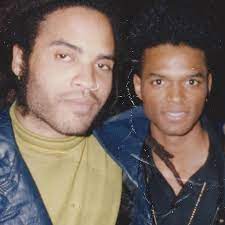
Miles Marshall Lewis (snapped with Lenny Kravitz) is a recognized pop culture critic, essayist, literary editor, fiction writer, and music journalist, with a B.A. degree in sociology from Morehouse College. He is the author of the essay collection Scars of the Soul Are Why Kids Wear Bandages When They Don’t Have Bruises (Akashic Books, 2004), concerning coming of age in the Bronx under the aegis of hip-hop culture at its genesis. He is also the series editor and founder of Bronx Biannual (Akashic), an urbane urban literary journal of fiction and essays, and author of There’s a Riot Goin’ On (Continuum Books, 2006), a book on the making of the seminal 1971 Sly and the Family Stone album of the same name.
During the past twelve years, he has written for The Nation, Rolling Stone, The Village Voice, The Believer, Spin, L.A. Weekly, Essence, and many other publications. He served as the music editor of Vibe, deputy editor of XXL, literary editor of Russell Simmons’s Oneworld, deputy editor of BET.com, and a contributing writer for The Source during the 1990s. His interview with the late Pulitzer-winning playwright August Wilson is anthologized in The Believer Book of Writers Talking to Writers (Believer Books, 2005), and his fiction has been published in Wanderlust (Plume, 2006), Brown Sugar 3: When Opposites Attract (Washington Square Press, 2004), Oneworld, Rap Pages, and Uptown. Promise That You Will Sing About Me, Miles' biography of Kendrick Lamar, was published in the fall of 2021.
MML on the RBP podcast, Sept. 2021
77 articles
List of articles in the library
Smoothe Da Hustler: Brooklyn Representer
Interview by Miles Marshall Lewis, The Source, April 1996
THE UNDERGROUND gem 'Broken Language' was no doubt the illest single to come from a hip-hop neophyte in a long time. Smoothe da Hustler rocked ...
Shyheim: Rugged child, running wild
Profile and Interview by Miles Marshall Lewis, The Source, June 1996
With a new album and a budding acting career, Shyheim sets out to lead a lost generation ...
Interview by Miles Marshall Lewis, The Source, August 1996
FINAL EXAMS AT Morehouse College were a bitch. Nearly four in the morning on a starry autumn night years ago, I found myself making a ...
Erykah Badu: Baduizm (Kedar Entertainment/Universal)
Review by Miles Marshall Lewis, Rolling Stone, 20 February 1997
PERHAPS THE first thing you notice about Erykah Badu is her uncanny vocal similarity to Billie Holiday – from the very beginning of Baduizm, Badu's ...
Adina Howard: Welcome To Fantasy Island (Elektra)
Review by Miles Marshall Lewis, Vibe, August 1997
WHEN YOU'RE a sexually liberated sista like Adina Howard, erecting a scale on which to balance your acute holike tendencies and your astute, self-styled feminism ...
SWV: Release Some Tension (RCA)
Review by Miles Marshall Lewis, Vibe, October 1997
AFTER SELLING two million copies of their ingenuous debut, It's About Time, and following it up with last year's platinum New Beginning, the ladies of ...
Janet Jackson: Brave Heart: Janet Jackson's Velvet Rope
Review by Miles Marshall Lewis, L.A. Weekly, November 1997
ACCORDING TO Ralph Ellison in Shadow and Act, no jazz musician struggled harder to escape the role of grinning minstrel than Charlie Parker, with the ...
Review by Miles Marshall Lewis, L.A. Weekly, 26 March 1998
A HANDFUL of the best hip-hop records to be produced in the '90s includes TLC's Crazysexycool, D'Angelo's Brown Sugar, Mary J. Blige's My Life and ...
De La Soul, Puff Daddy, Run-DMC, Wu-Tang Clan: All About the Benjamins
Essay by Miles Marshall Lewis, L.A. Weekly, 2 April 1998
Hip-hop: The need, not the greed ...
Daz Dillinger: Retaliation, Revenge and Get Back (Death Row) ***½
Review by Miles Marshall Lewis, Rolling Stone, 16 April 1998
CONFRONTED WITH a seeming domino effect of setbacks — including the murder of Tupac Shakur, the departure of Dr. Dre and the incarceration of CEO ...
Lenny Kravitz: Flower Of Power: Lenny Kravitz's 5
Review by Miles Marshall Lewis, L.A. Weekly, June 1998
'ROUND MIDNIGHT on December 20, 1989, at The World in downtown Manhattan's Alphabet City, Terence Trent D'Arby trooped back onstage to perform an obligatory encore ...
DMX: It's Dark and Hell Is Hot (Ruff Ryders/Def Jam) ***
Review by Miles Marshall Lewis, Rolling Stone, 9 July 1998
NEW YORK-SPAWNED RAPPER DMX has been priming listeners for his debut for months, reciting scene-stealing stanzas on releases by L.L. Cool J, Ice Cube and ...
A Tribe Called Quest: After The Love Is Gone: A Tribe Called Quest
Interview by Miles Marshall Lewis, The Source, October 1998
DRESSED IN A black T-shirt with THE LOVE MOVEMENT emblazoned in silver on the back, baggy jeans, and a blue denim fisherman's cap pulled down ...
RZA: The Man With The Microchip Brain
Interview by Miles Marshall Lewis, Spin, December 1998
Wu-Tang Clan frontman RZA makes his first movie: the bizarre sci-fi hip-hop adventure flick, Bobby Digital ...
Total: Kima, Keisha & Pam (Bad Boy/Arista)
Review by Miles Marshall Lewis, L.A. Weekly, 17 December 1998
TOTAL, THE Bad Boy Entertainment girl group promoted as "Puffy's angels," never quite reached gold status with their eponymous 1996 debut. The backlash against Bad ...
DMX: Flesh of My Flesh, Blood of My Blood (Def Jam )
Review by Miles Marshall Lewis, The Village Voice, 13 January 1999
It's like, we all got two sides to us, and it depends on what side of the bed you wake up on. That will depend ...
Foxy Brown: Myth Master: Foxy Brown: Chyna Doll
Review by Miles Marshall Lewis, L.A. Weekly, 10 February 1999
The fabrication of Ms. Foxy Brown ...
Foxy Brown, Nas: Myth Master: The fabrication of Ms. Foxy Brown
Profile by Miles Marshall Lewis, L.A. Weekly, 18 February 1999
FOXY BROWN is a chickenhead. ...
The Roots: Apocalypse Now: The Roots
Report and Interview by Miles Marshall Lewis, Spin, March 1999
THE ROOTS' new album, Things Fall Apart, bears all the signs of the Big Statement. There are five separate covers, each featuring a disturbing historical ...
Review by Miles Marshall Lewis, The Village Voice, March 1999
USED TO BE, a hiphop love song was something like Rakim's 'Mahogany' or Shallah Raekwon's 'Ice Cream'- tunes celebrating shorties from around the way; hardrocks ...
Overview by Miles Marshall Lewis, The Village Voice, 2 March 1999
A TRIBE CALLED Quest died for the sins of hip hop in 1998, so the story goes. R.I.P. And roll away the stone. ...
Too $hort: Can't Stay Away (Short Records/Jive) ***
Review by Miles Marshall Lewis, Rolling Stone, 1 April 1999
The don of pimped-out hip-hop returns ...
Nas: A Dollar A Holler: Nas: I Am
Review by Miles Marshall Lewis, L.A. Weekly, 28 April 1999
Two sides of Nas' coin ...
Review by Miles Marshall Lewis, Rolling Stone, 8 July 1999
Whither the Wu? For now, the Wu-Tang Clan's past is more exciting than its present ...
Mos Def: Black on Both Sides (Rawkus)
Review by Miles Marshall Lewis, Rolling Stone, 11 November 1999
The star of Black Star takes a positive-minded, versatile solo turn ...
Dr. Dre: Still D.R.E.: Dr Dre: 2001
Review by Miles Marshall Lewis, L.A. Weekly, 24 November 1999
WEBSTER'S UNABRIDGED defines the all-American midlife crisis as a period of psychological stress occurring in middle age, thought to be triggered by a physical, occupational ...
A Tribe Called Quest, Q-Tip: Q-Tip: Amplified (Arista)/A Tribe Called Quest: The Anthology (Jive)
Review by Miles Marshall Lewis, The Village Voice, 15 December 1999
THE GREATEST AESTHETIC lesson to learn from past masters like David Bowie and Madonna is the value of reinvention. ...
Review by Miles Marshall Lewis, The Village Voice, January 2000
I WAS FOREWARNED, and chose not to take heed. You know, how prophecy can get mofos all wound up like Chicken Little with the sky ...
The Notorious B.I.G.: Word According to B.I.G.: Notorious B.I.G.: Born Again
Review by Miles Marshall Lewis, L.A. Weekly, 12 January 2000
AND SO WAS WRITTEN the MC genealogy of the late Notorious B.I.G.: Grandmaster Caz was the father of Grandmaster Melle Mel, Grandmaster Melle Mel the ...
Review by Miles Marshall Lewis, The Village Voice, 19 January 2000
THIS ISN'T A generation-gap piece, really. I ain't even 30. But a lot of folks ain't authentically feeling Rakim Allah; they just takin' the "experts' ...
Smashing Pumpkins: Machina/The Machines of God
Review by Miles Marshall Lewis, L.A. Weekly, March 2000
CURRENT ROCK carries the air of an apprehensive lover who's lately been having a bit of trouble maintaining an erection, fretfully wondering, "Will I be ...
Bone Thugs-N-Harmony: BTNHResurrection
Review by Miles Marshall Lewis, Rolling Stone, 27 April 2000
CLEVELAND NATIVES Bone Thugs-N-Harmony have embodied the Nineties hip-hop ethos: Establish your street cred, and take your hardcore pop. ...
Macy Gray, Mos Def: Macy Gray/Mos Def: Roseland Ballroom, New York City
Live Review by Miles Marshall Lewis, Spin, May 2000
IF THERE WAS ever any doubt, the huge plaque onstage honoring the gold status of Mos Def's Black on Both Sides made it clear: The ...
Wyclef Jean: The Ecleftic: 2 Sides II a Book (Columbia)
Review by Miles Marshall Lewis, The Village Voice, 20 September 2000
EVER HAVE A bright idea, a 1000-watt bulb so blazin that it inevitably slides into the collective consciousness of pop culture? Even if the brainstorm ...
Review by Miles Marshall Lewis, L.A. Weekly, 20 December 2000
YOUR MOUTH IS contorted into a G. Dubya-worthy smirk. Your mind is flooded with the sights and scents of your adolescence: your senior prom, that ...
Interview by Miles Marshall Lewis, The Fader, Spring 2000
MOS DEF is missing the Grammys. Holed up for the past two hours in studio one of the Rocket Rehearsal Studios, and unassuming red-brick building ...
Erykah Badu: Brave Heart: Erykah Badu
Profile and Interview by Miles Marshall Lewis, Oneworld, January 2001
THE BEIGE, NONDESCRIPT couches at New York's LaGuardia Airport are surprisingly comfortable. Seven Sirius Benjamin-the adorably precocious three-year-old son of Erykah Badu and André Benjamin ...
Wu-Tang Clan: Can't Go to Sleep
Interview by Miles Marshall Lewis, L.A. Weekly, January 2001
WHAT THE HELL is going on with hiphop right about now? Rap's most popular, most talented MC â€" at one point in the running to ...
Aaliyah: The Highest, Most Exalted One: Aaliyah, 1979-2001
Obituary by Miles Marshall Lewis, The Village Voice, August 2001
THREE WEEKS BACK, I lay in a sea-salted bathtub with candles, bubbles, and headphones, listening to Aaliyah. Lamenting the state of my love life during ...
Maxwell: Now's the Time? Maxwell's Now
Review by Miles Marshall Lewis, L.A. Weekly, September 2001
MAXWELL. Not D'Angelo-Maxwell. Not Bilal-Maxwell. Not Musiq Soulchild, even. Maxwell. ...
Book Review by Miles Marshall Lewis, The Village Voice, 18 September 2001
YOU HAD TO BE THERE to understand that the book has yet to be written encompassing all the sheer intensity of suspenseful events, mesmerizing mise-en-scène, ...
Alanis Morissette: Under Rug Swept (Maverick/Warner Bros.)
Review by Miles Marshall Lewis, L.A. Weekly, 13 March 2002
ONCE UPON A TIME, Alanis Morissette was God. Not just in her role as the Almighty in director Kevin Smith's Dogma, but to the 16 ...
Interview by Miles Marshall Lewis, The Source, April 2002
THINGS ARE ABOUT to change. Trust. The rap industry may soon find itself caught out there as many hiphop fans seek sounds more suited for ...
Book Review by Miles Marshall Lewis, The Village Voice, 2 April 2002
Generation Hiphop's Aesthetics ...
Lauryn Hill: MTV Unplugged 2.0
Review by Miles Marshall Lewis, The Village Voice, July 2002
I can faithfully, honestly say that hiphop is dead. – Q-Tip Hiphop being counterculture, underground culture, that's sorta dead. It's all mainstream. It's just ...
Interview by Miles Marshall Lewis, The Nation, January 2003
RUSSELL SIMMONS, known for decades as Rush to his friends, is of average height and build for a man his age (45), with a clean-shaven ...
Interview by Miles Marshall Lewis, Oneworld, January 2003
ONE OF THE MOST captivating mouth-that-roared rock stars of the late 1980s/early '90s, 35-year-old singer/songwriter Sinéad O'Connor leaves as many contradictions trailing in her wake ...
Comment by Miles Marshall Lewis, L.A. Weekly, March 2003
Jaded Hiphop-Purist Insight #1: You cannot spit in the wind without being hit by 2Pac and the Notorious B.I.G. ...
Common: Against The Grain: Common
Interview by Miles Marshall Lewis, The Source, March 2003
EIGHT DAYS BEFORE Jimi Hendrix's sixtieth birthday, Common sits comfortably in the guitar god's apartment sipping Poland Spring. ...
Marilyn Manson: Sympathy For The Devil: Marilyn Manson
Interview by Miles Marshall Lewis, Oneworld, April 2003
BRIAN WARNER took the long, hard road out of hell (Canton, Ohio, to be exact) to emerge in 1994 on Portrait of an American Family ...
Review by Miles Marshall Lewis, L.A. Weekly, August 2003
EDDIE VEDDER CARES. If the casual music enthusiast remembers nothing else about Pearl Jam beyond their Beatles/Rolling Stones polarization with Nirvana in the early '90s, ...
Live Review by Miles Marshall Lewis, PopMatters, 19 March 2006
College Dropout Studies Abroad ...
Book Review by Miles Marshall Lewis, The Washington Post, 20 August 2006
The early years of a reggae superstar who gained worldwide renown. ...
Jay Z: Hova's Slight Return: Jay-Z: Kingdom Come
Review by Miles Marshall Lewis, The Village Voice, 21 November 2006
Jay-Z's aura finally outshines his art — what a drag it is getting old ...
Comment by Miles Marshall Lewis, The Village Voice, 27 March 2007
MAYHAP YOUR iPod has shuffled a Maxwell or Lauryn Hill tune into your mix lately, and led you to question, "Where they be?" The neo-soul ...
Interview by Miles Marshall Lewis, The Believer, June 2007
Choices for black men with long hair: Afro Dreds Perm That's it! ...
Review by Miles Marshall Lewis, The Village Voice, 17 July 2007
IF HE HADN'T choked to death in London's Samarkand Hotel 37 years ago, how many mediocre records would Jimi Hendrix have dropped by now? Stevie ...
Facing Off: Blackface, Minstrels and Hip Hop
Comment by Miles Marshall Lewis, Dazed & Confused, September 2007
In the year that Russell Simmons, Kurtis Blow and Eric B called for a clean-up of attitudes and language in hip hop, Miles Marshall Lewis, ...
Review by Miles Marshall Lewis, The Village Voice, 4 December 2007
RIGHT NOW, all we know about Wu-Tang Clan's 8 Diagrams – their first album in six years – is that at least two members (Ghostface ...
Review by Miles Marshall Lewis, The Village Voice, 4 December 2007
RIGHT NOW, all we know about Wu-Tang Clan's 8 Diagrams – their first album in six years – is that at least two members (Ghostface ...
Review by Miles Marshall Lewis, The Village Voice, 5 February 2008
Michael Jackson's Nigh-Unstoppable Thriller Gets the 25th-Anniversary Treatment ...
Gnarls Barkley: Hip-hop's Biggest Clowns: Gnarls Barkley: The Odd Couple
Review by Miles Marshall Lewis, salon.com, 3 April 2008
Are Gnarls Barkley's wacky costumes and goofy antics just a smoke screen for the massively successful duo's angst? ...
Review by Miles Marshall Lewis, The Village Voice, 6 May 2008
A half-centenarian provides more porny pop excellence ...
Britney Spears: On Britney Spears's Sadly Generic Circus
Review by Miles Marshall Lewis, The Village Voice, 10 December 2008
More blandishments from the dance floor ...
Review by Miles Marshall Lewis, The Village Voice, 9 March 2010
Gorillaz Get Serious: Plastic Beach loads up on guest stars and gravitas ...
Wynton Marsalis Toots His Own Horn
Interview by Miles Marshall Lewis, Ebony, 8 October 2013
YES, WYNTON Marsalis has soul. The knee-jerk criticism of the 51-year-old jazz trumpeter ever since his self-titled 1981 album has been that, while always technically ...
Kendrick Lamar Voices the Ferguson Era
Review by Miles Marshall Lewis, Ebony, 17 March 2015
WE CAN FINALLY take Black Messiah off repeat; masterpiece two has arrived. To Pimp a Butterfly, Kendrick Lamar's thematically and musically layered 16-track sophomore album, ...
The Get Down Proves Why The Bronx Will Always Matter
Memoir by Miles Marshall Lewis, The Fader, 11 August 2016
Why the 1970s depicted in Baz Luhrmann’s new Netflix series is an accurate portrait of that era. ...
Tommy Boy At 35: Tom Silverman Talks Hip-Hop's Most Iconic Indie Label
Retrospective and Interview by Miles Marshall Lewis, Genius, 18 August 2016
A history of the brand that brought the world Afrika Bambaataa, De La Soul, and Queen Latifah. No account of early hip-hop industry is complete without ...
Solange's A Seat At the Table Is The Epitome of #Woke Music
Review by Miles Marshall Lewis, Essence, 3 October 2016
Solo comes with Nina Simone, 'Black Is the Color of My True Love's Hair' levels of intra-cultural adoration all over A Seat at the Table. ...
A Tribe Called Quest: We Got It from Here... Thank You 4 Your Service
Review by Miles Marshall Lewis, NPR, 11 November 2016
EXPLAINING THE return of A Tribe Called Quest to the pop firmament is nigh impossible without hyperbole, so here goes: Imagine the Beatles had reunited ...
Guide by Miles Marshall Lewis, Essence, 11 February 2017
Six artists you may have already heard of who will be gracing the Grammys red carpet for the first time. ...
Review by Miles Marshall Lewis, The Village Voice, 20 March 2017
Drake's More Life is Another All-Purpose Emoji ...
A Tribe Called Quest, Miles Davis, Kendrick Lamar: The Sound In Our Veins
Memoir by Miles Marshall Lewis, The Fader, 30 June 2017
"How would someone young get turned on to jazz, an art form with its most innovative days behind it?" ...
Eric B. & Rakim: Apollo Theater, Harlem
Live Review by Miles Marshall Lewis, The Village Voice, 10 July 2017
Eric B. & Rakim play to their die-hard fans at Paid in Full tribute show ...
Prince: Sheila E. Opens Up About What It Was Really Like Creating Timeless Music With Prince
Interview by Miles Marshall Lewis, Essence, 14 July 2017
One of the most iconic female musicians of our time shares details about her musical journey and her many collaborations with legendary entertainer Prince. ...
Ayo: Nigerian-German Singer Ayo Didn't Go Into Music To Make Pop Hits And Is Unapologetic About It
Interview by Miles Marshall Lewis, Essence, 2 March 2018
ANYONE ATTEMPTING to prove the redemptive power of music needs to look no further than the Nigerian chanteuse, Ayo. ...
back to LIBRARY